These cookies are used to provide you with a more personalized experience on our website and to remember
choices you make when you use our website.
For example, we may use functionality cookies to enable commenting functionality.
These cookies are used to collect information to analyze the traffic to our website and how visitors are
using our website.
For example, these cookies may track things such as how long you spend on the website or the pages you visit
which helps us to understand how we can improve our website site for you.
The information collected through these statistics and performance cookies do not identify any individual
visitor.
Read more about exact cookies we use in our Privacy Policy
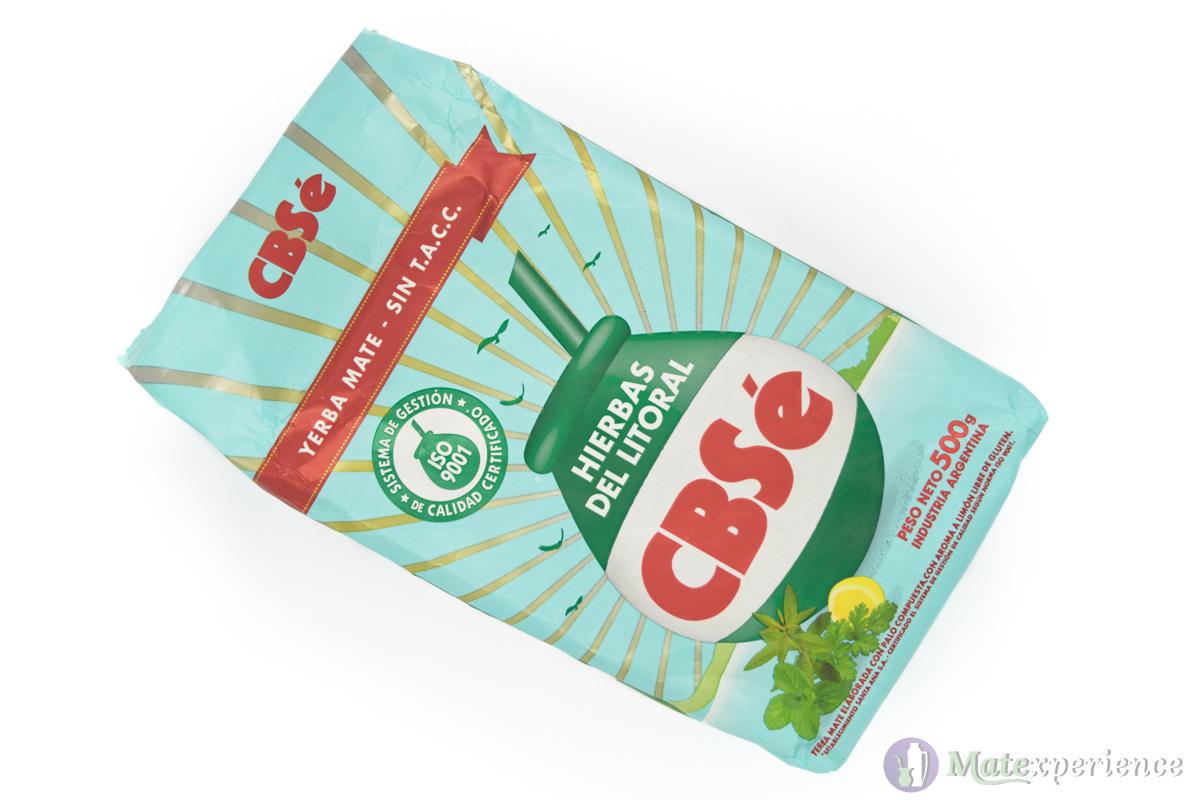
CBSé Hierbas Del Litoral
Yerba Mate Review
10 minutes to read
Share this article
Copy link to clipboard
If you make a purchase through links in this article, I get a small commission at no cost to you. Learn more
Unlike most of the “safer” Argentine herbal compuestas that opt for a standard set of mint, pennyroyal and maybe some boldo, CBSé Hierbas Del Litoral, as you can judge from its name, goes a bit beyond that and adds “coastal herbs” such as coriander as a spice note, as well as lemon verbena and lemon flavoring for extra zestiness and brightness, which together form a quite unique cola-like taste profile that is fun to discover and explore with both hot and cold water. In my opinion CBSé Hierbas Del Litoral is a must-try even if you consider yourself a yerba mate purist and generally dislike blended or flavored yerbas.
Use code MateExperience10 for 10% off the whole order!
First look
Nose
Because CBSé Hierbas Del Litoral is a compuesta, be prepared to embrace the whole array of different smells, apart from inherent aged Argentineearthiness and woodiness.
Lemon, which comes in a form of natural flavoring, not a zest, is the first and most obvious note; it is also quite round and rich with the addition of lemon verbena, which adds the herbaceous greenness to the otherwise flatter smell of lemon.
Following closely I get the pleasantly bitter, grassy and aromatic spicy notes of pennyroyal and coriander.
There is some mint as well in this blend, however I barely notice it in the aroma of CBSé Hierbas Del Litoral, which is nice because the abundance of mint often overpowers every other herb in yerba mate compuestas.
Yerba mate itself, apart from providing an earthy base layer, is also fragrant and sweet, with notes of dry fruit and candy.
Overall, CBSé Hierbas Del Litoral has a pleasant herbal-fruity aroma that feels natural and is quite potent — you don’t have to search hard for those aromatic notes.
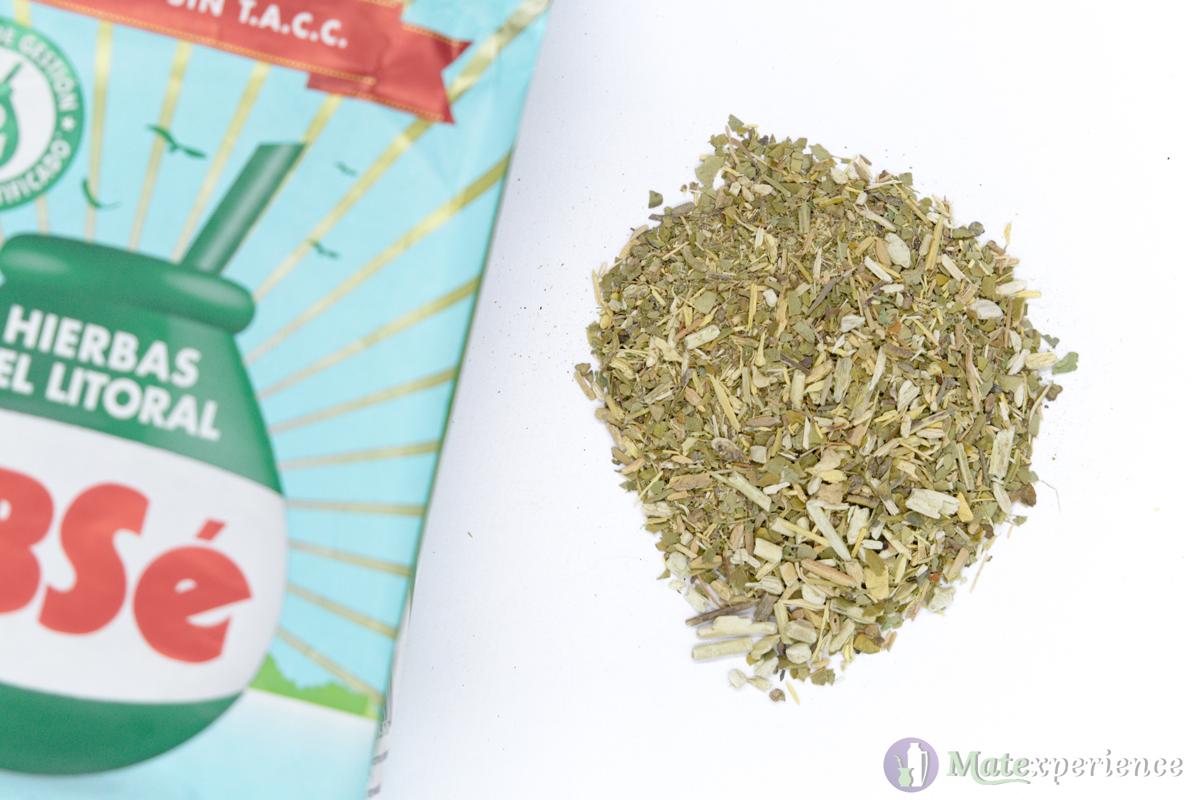
Cut
As the majority of CBSé yerba mates, this one is a con palo.
It is fairly standard for CBSé, as they are likely using the same elaborated yerba mate as a base for all of their blends.
Stems are quite abundant in CBSé Hierbas Del Litoral, and vary in size from small splinters to larger and thicker pieces; leaves also differ in size, although I cannot see any huge chunks, more like small to medium particles; powder is present and in my opinion is perfect in volume — not too dusty to worry about bombilla clogging, and not too “loose” and clean to make it hard to build and maintain the mountain of yerba.
Color-wise, CBSé Hierbas Del Litoral is pretty uneven — I see a lot of inclusions of darker toasted brown leaves and stems in the cut of this yerba mate, which was likely seared with fire before properly drying.
Despite being a compuesta, I don’t see any visible non-yerba leaves in the cut of CBSé Hierbas Del Litoral.
Most likely those pieces of mint, lemon verbena, pennyroyal and coriander are so fine that they are practically indistinguishable within the yerba mate powder.
Preparation
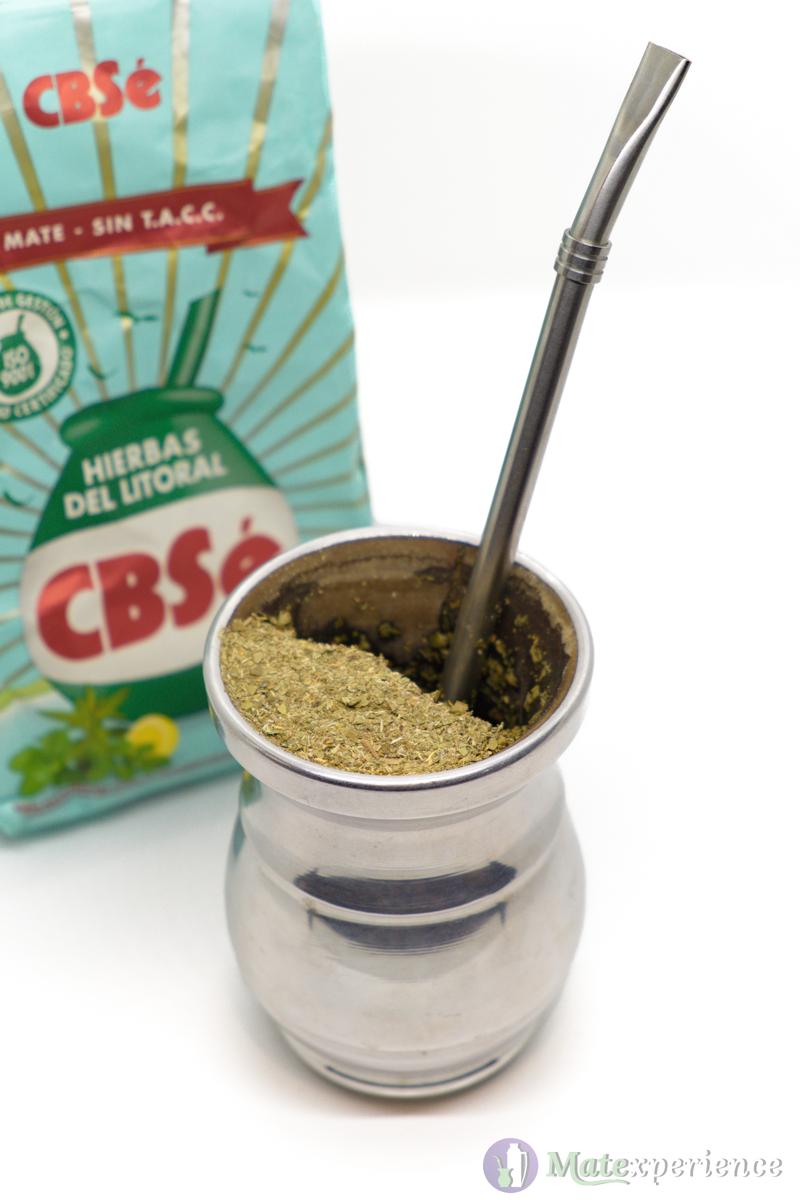
Traditional mate from CBSé Hierbas Del Litoral is straightforward and easy.
Con palo cut with abundant stems makes it trivial to drink this mate from gourd and bombilla, so this is a perfect time to whip out your more clog-prone and less used bombillas, such as
spring bombilla or
slotted bombilla with large slits.
Since CBSé Hierbas Del Litoral is a compuesta, I was really curious to see if it is suited for tereré.
And I’m glad to report that this yerba mate is absolutely delicious with cold water!
Preparing tereré is also super easy, and if you need a quick visual how-to with informative short video instructions — you can check out our tutorial.
When it comes to the temperature of water for hot mate, I was surprised to find out that CBSé Hierbas Del Litoral tasted better and more flavorful at hotter ranges, between
70° Cand85° C/160° Fand185° F.
At
60° C-65° C/140° F-150° Fthis mate was pretty bleak and required some time to steep after refill to get any flavor out of it.
So the general advice from me is to either go ice-cold or quite hot with this yerba mate.
However, I personally enjoyed CBSé Hierbas Del Litoral more at
70° C-75° C/160° F-165° F.
In this temperature range, you can expect a more balanced taste and a nice evolution of flavors, which I’ll elaborate on in the next section.
80° C-85° C/175° F-185° Fis still delicious and acceptable to me, and I even got a bit longer durability at such high temperatures, but the bitterness of this mate got higher too and was on the verge of being overwhelming.
If you’re not afraid to go as hot as
85° C/185° F, I’d love to hear your experience and impressions from CBSé Hierbas Del Litoral, and especially how it compares to lower temperatures, so share it in the comments below!
With water that is around
70° C-75° C/160° F-165° F, mate from CBSé Hierbas Del Litoral starts very shyly and slowly.
First 5 to 6 refills give you some hints of what to come, but not the full picture.
As in its nose, lemon note is the first thing that pops up in the taste.
Some herbal and grassy notes from lemon verbena and pennyroyal are present in the initial taste of this mate, but I don’t sense any significant body and earthiness from yerba mate.
Once this mate has warmed up, the real fun begins.
All of a sudden I get notes of almonds and marzipan.
Sweetness also becomes more apparent in the taste of CBSé Hierbas Del Litoral.
I can finally taste coriander in the second third of this mate, and mixed with other herbs it creates spicy, almost cinnamon-like flavor.
Surprisingly, I don’t get any mint in the taste of CBSé Hierbas Del Litoral, but I actually welcome it — zesty note of lemon combined with spiciness from herbs and that cinnamony coriander together create something that I cannot describe other than like a more complex cola flavor, which is something that I haven’t encountered before in any of the yerba mate blends.
As the flavorings are gradually washing away, lemon shifts to the background and CBSé Hierbas Del Litoral becomes more herbal and more nutty in the final third of the drinking.
Here, yerba mate astringency and earthiness become the most apparent and noticeable, and they pair really well with leftover spiciness and nuttiness of coriander and bitter green notes of added herbs.
With this astringency, CBSé Hierbas Del Litoral gains more body, bordering on a full-body territory, but if combined with its initial lightness, averages out at medium body.
Closer to lavado those earthy and more aggressive notes tone down, hint of leftover lemon becomes apparent anew, and final washed out sips are again reminding me of cola, this time much more watered down.
As a tereré, CBSé Hierbas Del Litoral is absolutely heavenly.
The additive herbs, spices and lemon flavoring suit ice-cold water really well, creating a very refreshing flavor combination.
Lemon flavoring and lemon verbena add zestiness and zing; pennyroyal and coriander enrich and deepen the taste of this tereré with aromatic spiciness; even mint here is more pronounced than with hot water, and is very welcomed in a cool summer beverage that is tereré.
Again, the spicy flavor combo cannot be overestimated — together these herbs and spices create taste notes that are not present in their raw form in this yerba mate.
As with hot mate, I get notes of almonds and marzipan, as well as a slight coconut note, which give tereré from CBSé Hierbas Del Litoral not only the cola taste, but also somewhat remind me of a piña colada!
The earthiness of yerba mate is not as pronounced as with hot mate, but it is still there, and still make me not forget that it is yerba mate that I am enjoying, not just some herbal fruity drink.
For review purposes I use plain ice-cold water for tereré to identify all the flavor nuances, but outside of review writing, for my own pleasure I often make tereré ruso, which involves adding fruits or juices to the ice water inside the thermos.
However, with CBSé Hierbas Del Litoral, the added flavorings and herbs are so enjoyable as is, I don’t even want to add any juice or extra herbs to it — that’s how much I adore the composition of this yerba mate.
Finish
The aftertaste of CBSé Hierbas Del Litoral is very different compared to the taste of this mate.
It is more bitter, more herbaceous, more nutty and is pretty consistent throughout the whole duration of drinking.
There is no more lemon in the finish, but the forgotten mint makes its sudden appearance only after the sip of CBSé Hierbas Del Litoral.
It is still very tame and shy, and definitely does not give that cooling minty mouthfeel, and is more grassy and herbal like the rest of the herbs in this compuesta.
But the main star of the aftertaste is marzipan, which becomes more bold, bright and sweet in the finish of this mate.
At a certain point, the aftertaste becomes so bright that makes me want to slow down my sipping cadence, but overall I would say that even the fastest of the sippers will be able to keep up with CBSé Hierbas Del Litoral, as it remains quite drinkable.
In a tereré, the aftertaste of CBSé Hierbas Del Litoral is much more subtle than in hot mate.
All the fun here happens in the taste, not finish, making it very drinkable, which in my opinion is desired for tereré, because you tend to drink it to cool yourself off on a scorching day, and being able to enjoy a few back-to-back sips without exhausting your taste buds is very welcomed.
Install our free web app!
It is instant and won't take up space on your device. Keep reading Matexperience anytime, anywhere — even offline.
Durability
As a hot mate, with water around
70° C-75° C/160° F-165° F, I was able to get on average 15 to 17 refills from CBSé Hierbas Del Litoral, making it a moderate durability mate, that sits just on a verge of being short.
Hotter water —
80° C/175° Fand higher — in my experience will yield you in a longer mate, up to 20 refills on average.
With colder water, hot but below
70° C/160° F, on the other hand I was never able to squeeze more than 10 refills.
Which is surprising, considering that in tereré form, CBSé Hierbas Del Litoral was actually longer.
Something about ice-cold water was able to bring out more flavors and refills from this yerba mate.
However, as tereré, CBSé Hierbas Del Litoral was all over the place when it comes to its durability.
Sometimes I was able to only get about 13 refills, and other times I made tereré I got literally double that — 26 refills.
I was never able to understand what caused such volatility and discrepancy in number of refills — I shook the bag each time before filling the gourd 2/3 with yerba, and used either my guampa or the same stainless steel gourd.
Anyway, I’d like to hear what are your experiences with CBSé Hierbas Del Litoral, particularly when it comes to its durability in tereré form, so if you end up getting a bag of this yerba mate — please share in the comments how many refills you got on average from this tereré.
The last thing you want while drinking mate is to constantly re-heat your water or add more ice to it.
No matter if it's hot mate or cold tereré,
use a
vacuum bottle
or a very popular in South America
mate thermos
with spout.
Effect
As a tereré, CBSé Hierbas Del Litoral is very refreshing as you would expect from a caffeinated ice-cold drink, and is a great choice for sizzling hot summer days.
Hot mate, in my experience, is one of those rare yerbas that have relaxing, almost sedative effect.
Maybe it is because this compuesta reminds me of some herbal teas, like chamomile tea or mint tea that you usually drink at the end of the day to relax and unwind before sleep, maybe it is the effect of the added herbs along with a milder and softer yerba mate, but CBSé Hierbas Del Litoral was always able to calm me down, and I really enjoyed sipping on the hot mate from this yerba during evenings.
In the mornings, I didn’t notice any additional energy provided by this mate, so don’t rely on it to wake you up after a short night of bad sleep.
Other than that, CBSé Hierbas Del Litoral will still give you clarity of mind and great health benefits that all the yerba mate is known for.
* * *
Don't forget to explore the rest of our growing library of 70+ comprehensive, in-depth yerba mate reviews.
What are your thoughts on CBSé Hierbas Del Litoral? Comment below!
Join the free email newsletter!
Get access to new content as soon as it is published and receive exclusive offers, deals and discounts on yerba mate and related products! You can unsubscribe anytime.
Body
Characteristic, used to define the tactile feel of mate in the mouth, similar to other gourmet products, like wine or coffee.
It includes the mouthfeel of the drink, its thickness and weight.
Cut of yerba mate, drying methods and aging all contribute to the body of mate.
Usually, body can be described as light, medium and full — the more thick and dense mate feels in the mouth, the more full body it has.
Special drinking straw with a filtration system in the lower end of it.
Usually made from metal or hollow-stemmed cane.
Bombilla is used for drinking mate traditionally from a gourd.
Compound in Spanish.
Another word for a yerba mate blend.
Yerba mate marked as compuesta comes with added herbs, like mint and lemongrass, or even with something like orange zest and green tea.
With stems in Spanish.
Con palo is a type of yerba mate cut which is characterized by presence of stems, or palos in Spanish.
Usually mate brewed with con paloyerba mate is more light and sweet than mate prepared from sin palo cut.
Very popular in Argentina and Paraguay.
In Argentina, according to point 2.1 of the article 1194 of Argentine Food Code, con paloyerba mate should contain no less than 65% of dried leaves, coarsely ground or pulverized, and no more than 35% of coarsely or finely ground stems and sticks.
A vessel used for drinking mate traditionally.
Usually it is made from a real dried calabash gourd, or calabaza in Spanish, hence the name.
Today the term gourd is used not only to describe a calabash vessel, but any other cup from which mate is being drank (wooden, metal, ceramic, etc.).
Spanish adjective which means washed.
Lavado is used as a term to point out that all the flavors “washed away” from mate and it becomes tasteless at the end of the drinking session.
The more refills yerba mate can take before becoming lavado, the longer durability it has.
Pronounced [MAH-teh].
Traditional South American caffeine-rich infused drink, very popular in Argentina, Paraguay, Uruguay and Southern Brazil (the term chimarrão is used there more often).
It is prepared by steeping dried leaves of yerba mate in the gourd.
Sometimes the gourd itself is referred to as mate.
Infusion of yerba mate, similar to mate but prepared with cold water and ice.
Most popular way of consuming yerba mate in Paraguay.
Tereré is usually enjoyed from guampa and bombilla often with addition of yuyos.
Pronounced [YER-bah MAH-teh] (or [SHER-bah MAH-teh] in Rioplatense Spanish).
Also known as Ilex paraguariensis, a holly plant natively grown in South America, particularly in Northern Argentina, Paraguay and Southern Brazil (the term erva mate is used there more often).
Yerba mate is used to make a beverage known as mate in Spanish, or chimarrão in Portuguese.
Often, the term yerba mate is used to describe not only a plant, but also a final product of grinding, drying and aging the plant.